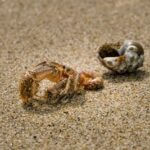
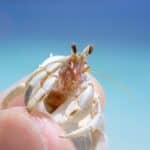
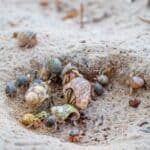
Shells will be traded and upgraded periodically, usually when a hermit crab molts and grows in size. If a hermit crab doesn’t change shells, it may become trapped.
Hermit crabs won’t switch shells unless they consider the replacement an upgrade.
They can become trapped in shells because they’re too big or because the shell has been painted, gluing them inside. Shy hermit crabs may also be too afraid to change shells.
If your hermit crab can’t change shells, make the process easier by bathing it in saline water, allowing it to slip out of the shell and into a replacement.
If your hermit crab isn’t changing shells, determine if this is by choice or circumstance.
Don’t worry if your hermit crabs seem happy in their existing shells. If a hermit crab is trapped in its shell or wishes to trade but is too afraid to do so, you’ll need to assist.
When Will My Hermit Crab Change Shells?
All hermit crabs change shells periodically, usually following a molt.
When a hermit crab molts, it sheds its existing exoskeleton and grows a replacement. Hermit crabs often increase in mass during a molt, making a new shell essential.
Junior hermit crabs can molt several times in the first 12-18 months of their life. Once they reach adulthood, molting slows to every 18 months. The hermit crab will continue seeking a new shell.
Some hermit crabs seek to change their shells between molts. The most common explanation is damage to an existing shell. A new shell is considered useless if the crab’s habitat no longer offers protection against the sun or predators.
Some hermit crabs are forced to change shells due to conflict with a conspecific. If a dominant hermit crab covets the shell of a rival, it will challenge the incumbent to a duel.
The former occupant will need a replacement if the challenging hermit crab wins.
How Does a Hermit Crab Change Shells?
Wild hermit crabs live in large colonies with 100 or more members. This leads to competition for shells, so they operate a democratic approach to trading that Animal Behavior calls a “vacancy chain.”
When a new shell is found on a beach, hermit crabs investigate it. If the shell is considered suitable for habitation, the hermit crabs line up in order of size. The largest hermit crab then leaves its shell and tries on the new shell for size.
If the dominant hermit crab declines to keep the new shell, it’ll return to its old one, and the next hermit crab in line will try on the discovery.
If a hermit crab finds the new shell agreeable and wants to keep it, it’ll remain inside. The next hermit crab will try on the shell it has vacated.
The vacancy chain continues until all hermit crabs are content with their new or existing mobile home.
What Happens if a Hermit Crab Doesn’t Change Shells?
A shell’s a hermit crab’s home, so it’ll guard the shell. While admirable, it can become dangerous. Hermit crabs that refuse to vacate a shell that’s no longer fit for purpose put themselves at risk.
If a hermit crab has outgrown a shell, it’ll be equivalent to wearing poorly fitting shoes. It may start with some bearable discomfort, and eventually, permanent damage may be done.
There will be a reason if your hermit crab refuses to leave its shell.
Why Hasn’t My Hermit Crab Changed Shells?
Just placing new shells in a habitat won’t be enough to convince your hermit crabs to change. They’ll stay put in their shells if they’re all comfortable and content.
All hermit crabs will eventually need to trade shells. If your hermit crabs are struggling or refusing to do so, you must learn what’s happening and help them make the change.
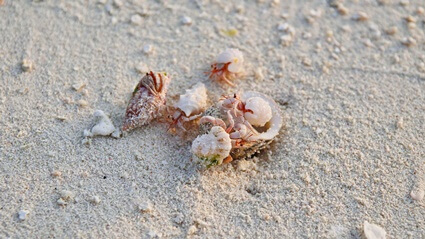
Wearing the Best Available Shell
Hermit crabs will only change shells if the replacement is considered an upgrade.
The hermit crab sees no reason to switch if the existing shell offers ideal dimensions and protection. It will remain within the current shell until it is no longer fit for purpose.
Trapped Within the Shell
If your hermit crab seems keen to change shells but has yet to do so, it may be trapped inside.
The most common reason a hermit crab becomes trapped in a shell is its size, remaining in place too long, and can no longer escape.
Painted shells are also dangerous to hermit crabs. While the potential toxicity of paint flakes is the biggest reason for this, paint can also glue a hermit crab’s skin to the inside of a shell.
If your hermit crab is trapped inside a shell, never try to pull it out by force. This will cause significant stress for your hermit crab, and you’ll likely be pinched in self-defense.
Dowse the hermit crab in water to loosen the shell’s hold and tempt them outside.
Too Anxious to Leave the Shell
Hermit crabs are often nervous by nature, especially when living in captivity.
The shell is a hermit crab’s first line of defense against threats. A hermit crab won’t risk leaving a shell to trade up if it worries about its safety.
Check for these common concerns if your hermit crabs need to change but continually hide within a shell:
- The temperature in the habitat is too high (over 85°F), or the humidity is too low (below 80%).
- The habitat lacks a substantial difference between light and dark.
- Other hermit crabs bully and intimidate the hermit crab, leaving it afraid to exit the shell in case it can’t find a replacement.
The problem may also lie outside the habitat. Check for loud noises, such as a stereo or TV set, in the immediate vicinity. According to Behavioral Ecology, loud noises can confuse a hermit crab and negatively influence decision-making.
How To Get My Hermit Crab To Change Shells
Changing shells must always be an active choice made by a hermit crab, and you must never force it out of its shell.
You can make the process easier by encouraging the hermit crab to bathe in salt water, which will loosen a snug fit. You must also ensure the new shell captures the hermit crab’s imagination.
Moistening shells with saline water makes them smell more appealing to hermit crabs.
According to BMC Neuroscience, salt water stimulates a hermit crab’s sense of smell. If the shell has been in contact with such liquid, a hermit crab is likelier to investigate it.
If a hermit crab is going to change shells, it wants to feel like it is stepping into an upgrade.
This involves finding the perfect shell size, shape, and solidity. The new shell must not be damaged—never offer a cracked or broken shell.
You can purchase new shells online or claim them from a local beach.
If you’re gathering shells yourself, sanitize them by boiling them in hot water for around 20 minutes and allowing them to cool off before putting them into the tank.
When choosing new shells for your hermit crabs, choose vessels roughly equivalent in size – just a little larger. Hermit crabs will not exchange a snug fit for a large, cumbersome, heavy alternative to move freely inside.
Consider the shape of the shell, too. Most shells have an O- or D-shaped opening, and different breeds of hermit crabs prefer varying styles. Look at the shells your hermit crabs currently wear and find replacements of an identical kind.
Most hermit crabs will change shells when they consider it necessary. If your hermit crabs aren’t changing shells but show no signs of distress, be patient and wait for them to decide.